
“Reading a Book Is a Form of Resistance.” Georgi Gospodinov Addresses Armenian Readers
07/06/2026
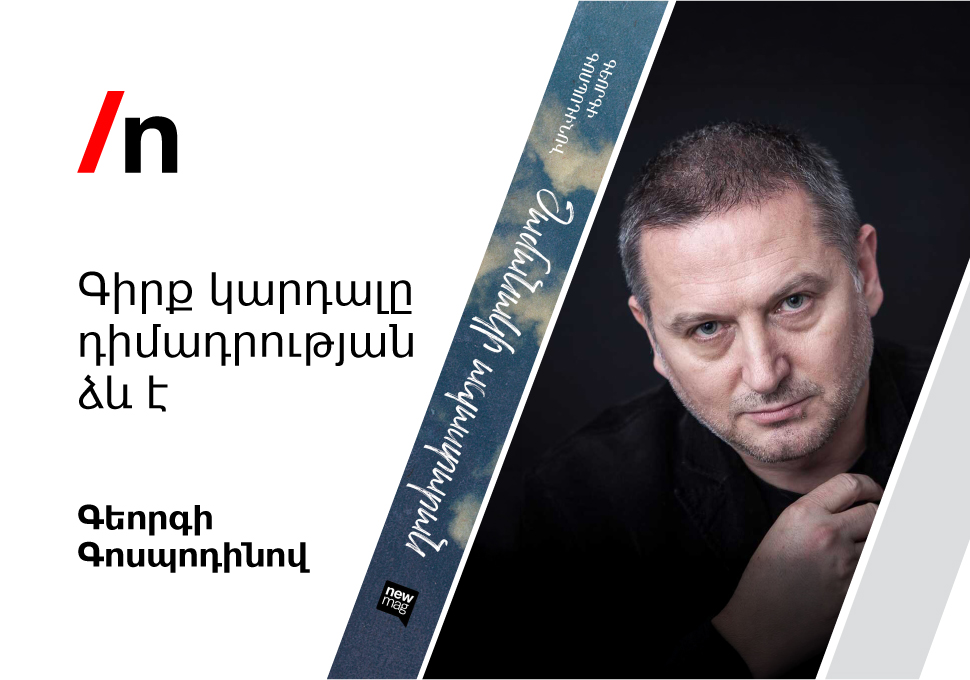
One of the most acclaimed voices in contemporary European literature, Georgi Gospodinov, has sent a special message to Armenian readers to mark the publication of the Armenian edition of his novel “Time Shelter”. In his video message, the Bulgarian author speaks about memory, nostalgia, and the role of literature in an increasingly polarized world.
Gospodinov describes “Time Shelter” as a novel about choice, the past, and the dangerous ways nostalgia can be manipulated.
According to the author, populists and dictators often "sell people the future dressed in the clothes of the past." Literature, he argues, has the power to resist this by cultivating empathy and critical thinking.
"Reading a book is a form of resistance. Literature and storytelling can still build that resistance. They awaken empathy, which is one of the most powerful antidotes to propaganda."
The author thanked Newmag for publishing the Armenian edition of the novel, expressed his wish to attend the presentation in person, and said he hopes to meet Armenian readers soon to discuss the book together.
Georgi Gospodinov is one of the leading figures of contemporary European literature. The Bulgarian novelist, poet, and literary critic has gained international recognition for his original and genre-defying works.
His novel “The Physics of Sorrow” received worldwide acclaim, while “Time Shelter”, translated into English by Angela Rodel, won the International Booker Prize in 2023, becoming the first Bulgarian novel to receive the prestigious award.
This is Gospodinov's second book published in Armenian by Newmag. In 2022, the publishing house released “The Physics of Sorrow”, also translated from Bulgarian by Gohar Abovyan.
Originally published in 2020, “Time Shelter” imagines a world where people seek refuge in the past. At the heart of the novel is the "Clinic of the Past," where patients with Alzheimer's disease are surrounded by carefully reconstructed environments from previous decades to help recover their memories. Soon, however, healthy people also begin to seek shelter there, escaping the uncertainty of the present and longing for a more familiar past.
Published in Armenian by Newmag, ”Time Shelter” is supported by its main partner, Eurostan Uyut.
Sharp, ironic, unsettling, and deeply moving, the novel explores memory, time, nostalgia, and the choices societies make, asking what happens when the past begins to replace the future.
As The New Yorker wrote, Gospodinov "masterfully draws our attention to the violence that the past exerts on the present."
Share


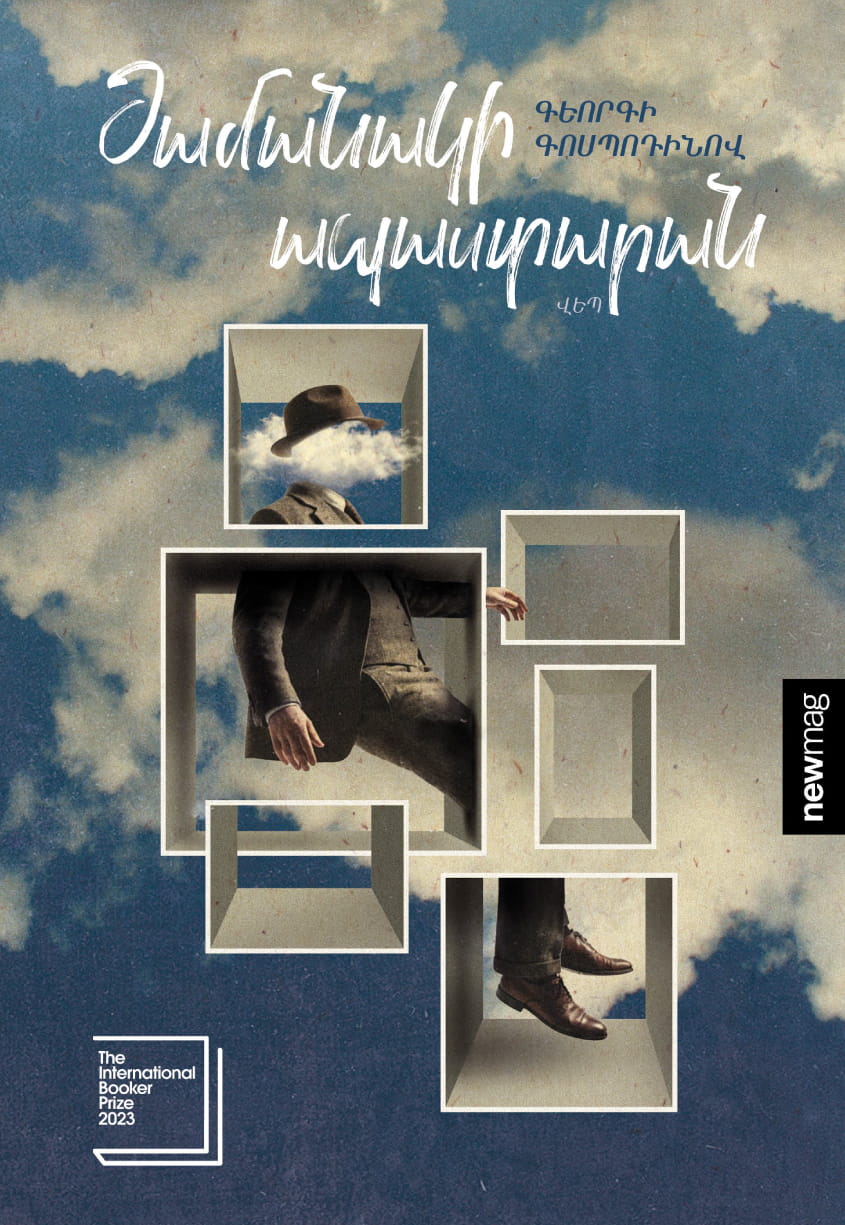
Georgi Gospodinov
6800 ֏
Description
“Time Shelter” invites us into a world desperately seeking to return to the past before it is finally forgotten. The story begins: “At one point they tried to calculate when time began, and when the planet Earth was created. The Irish bishop Usher, in the mid-17th century, calculated not only the exact year, but also the date: October 22, 4004 B.C. It was a Saturday (naturally). According to some, Usher also noted the exact time, around 6 p.m..”
However, time for the narrator, in his own perception, begins at the moment when he meets Gaustin, the “time wanderer.” Gaustin has moved away from modern reality: he reads old newspapers, wears old clothes, and wanders the forgotten avenues of the 20th century. Gaustin opens the first “Clinic of the Past” in Zurich. People with Alzheimer's are offered a unique treatment here: each floor of the building meticulously recreates one of the past decades.
Gaustin's assistant is the book's mysterious, anonymous narrator, whose job is to collect fragments of the past - from 1960s furniture and 1940s shirt buttons to nostalgic scents and barely noticeable rays of afternoon light. The more convincing the reproduction of the era becomes, the more people come to the clinic. Even healthy people come to escape the chaos of everyday life. A sharp, moving and at the same time tragicomic story about the temporary refuge that we seek in the past when the present does not obey us.
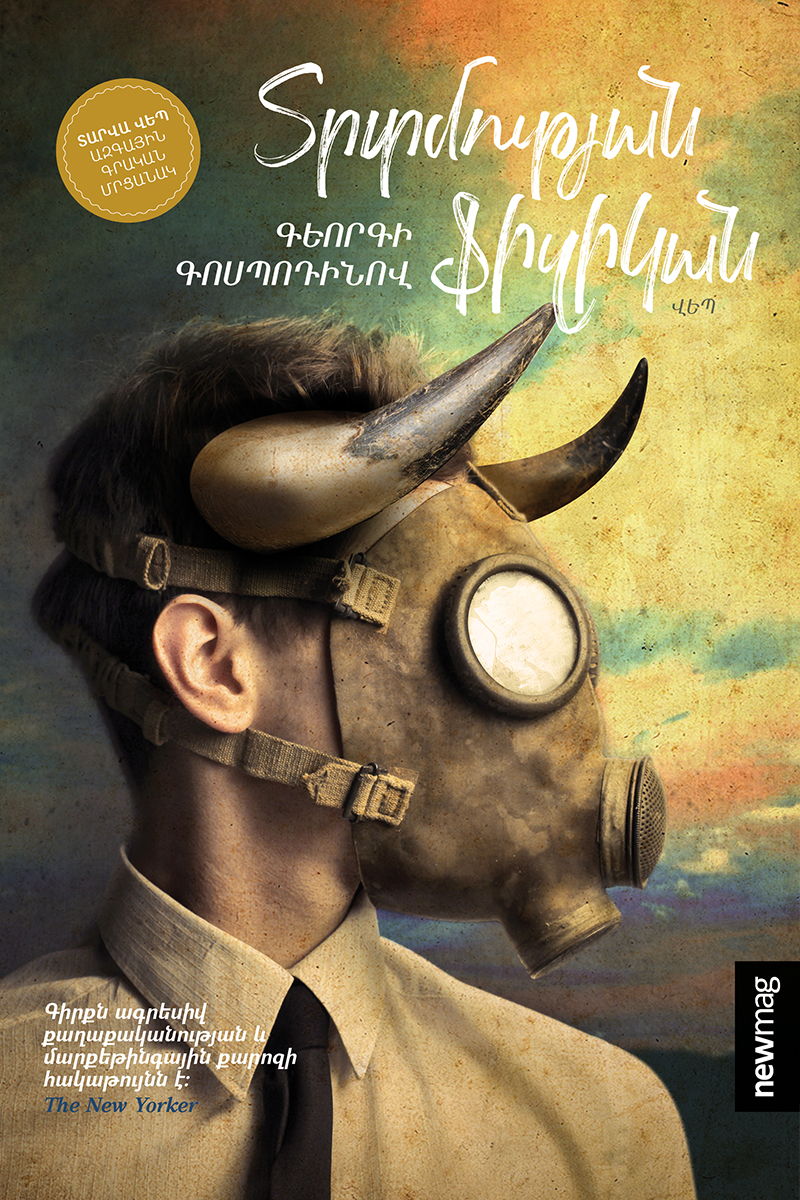
Georgi Gospodinov
6800 ֏
Description
Using the myth of the Minotaur as its organizing image, the narrator of Gospodinov's long-awaited novel constructs a labyrinth of stories about his family, jumping from era to era and viewpoint to viewpoint, exploring the mindset and trappings of Eastern Europeans. Incredibly moving—such as with the story of his grandfather accidentally being left behind at a mill—and extraordinarily funny—see the section on the awfulness of the question "how are you?"—Physics is a book that you can inhabit, tracing connections, following the narrator down various "side passages," getting pleasantly lost in the various stories and empathizing with the sorrowful, misunderstood Minotaur at the center of it all.
Read also