

The TV Presentation of Ashot Hayruni’s "Waiting for Europe" Took Place (Video)
11/23/2026

Newmag Publishing House presented a new historical and political study, Ashot Hayruni’s "Waiting for Europe”, on Armenia TV’s "Good Morning" program. Ashot Hayruni, Professor in the Department of Armenian History at Yerevan State University (YSU) and Head of the Genocide Studies Division at YSU’s Institute for Armenian Studies, presented the core theses and key findings of his work.
"Waiting for Europe" was published under the Hasratyan-Minasyan Foundation’s historical research grant, "Rethinking 20th-Century Armenian History".
Historian Ashot Hayruni believes that the years 1918–1920 offer vital lessons for future generations - lessons that remain urgent and relevant today and can help prevent the repetition of the same mistakes:
"The great novelist and publicist Raffi said that history is a seminary, a classroom where future generations must be educated by learning to guard against the mistakes made by their ancestors.
A comprehensive examination of the events of that period makes it clear that those lessons were never fully accessible to subsequent generations; instead, unfounded stereotypes took root. This era was fateful for us - marked by new geopolitical developments, colliding interests, and the birth and fall of the First Republic."
Ashot Hayruni outlined the two primary causes behind the events, catastrophes, heavy losses, and defeats of the First Republic: "Those mistakes are two: the misguided foreign orientation of the military-political leadership and our insufficient self-organization. These two factors became the foundation for the disastrous course of events.
Historical developments during that period brought extraordinary opportunities not only to secure the territory of the Republic of Armenia, but also to acquire substantial new territories in Western Armenia. We failed to properly assess the role of Soviet Russia; had we done so, we could have emerged from that fateful juncture in a far more advantageous position."
Examining the events of 1920, Ashot Hayruni believes they are repeating themselves today: the same geopolitical interests are at play in the region, the same Russia–West confrontation, the same challenges, and the same neighbors with their ambitions. The historian is convinced that if the mistakes of the First Republic are repeated, we risk losing the Third Republic as well.
Share


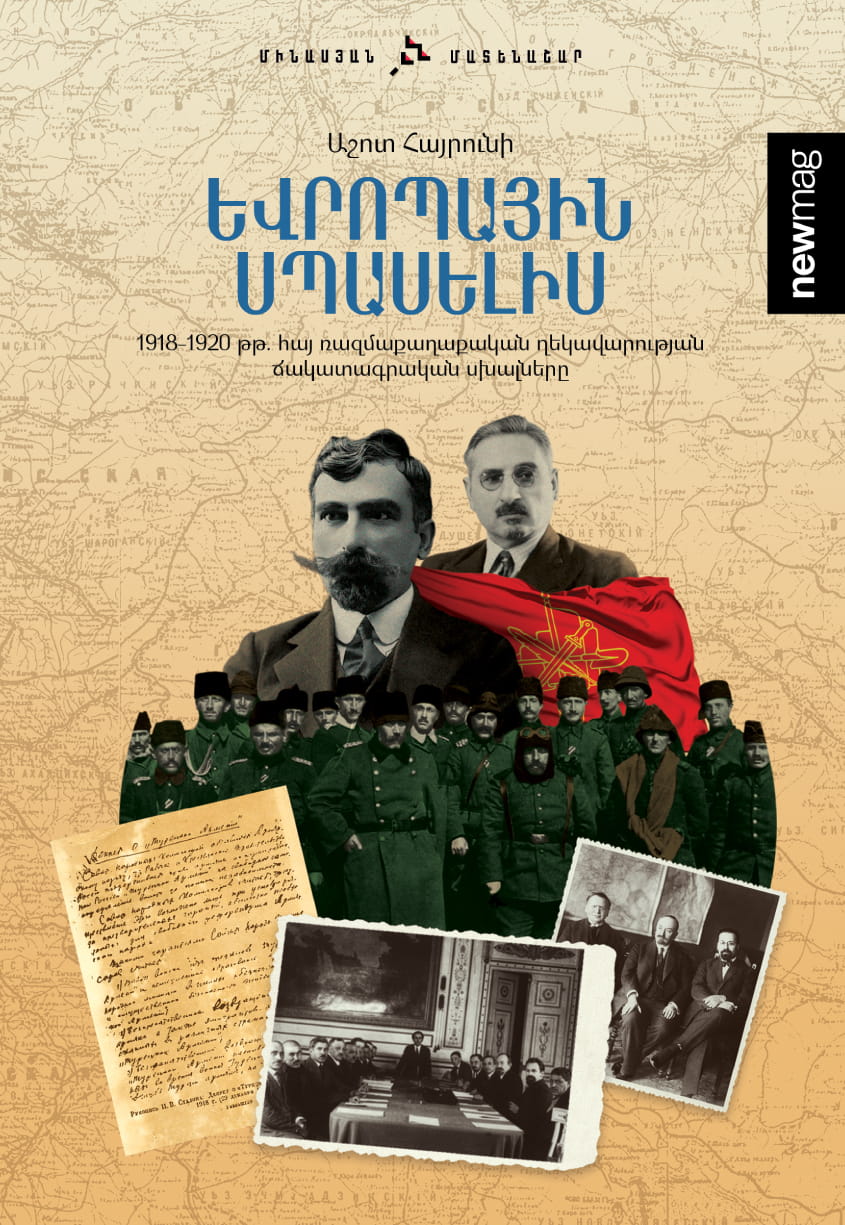
Ashot Hayruni
6800 ֏
Description
The geopolitical developments of 1918–1920 presented the Armenian people with historic opportunities that, had they been accurately assessed and strategically pursued, could have not only prevented numerous national catastrophes but also placed Armenia in an exceptionally advantageous position, securing significant territorial and political gains.
These opportunities, however, were never realized. The book argues that the principal reason lay in the Armenian military and political leadership’s failure to adequately recognize Soviet Russia’s growing influence in the region and its decision to pursue a foreign policy predicated on Western support. This strategic orientation, which had repeatedly proved unreliable in the past, once again resulted in disillusionment and devastating losses.
Challenging a widely accepted historical narrative, the author contends that the collapse of the First Republic of Armenia was not primarily the consequence of a Kemalist–Bolshevik alliance, but rather the outcome of strategic miscalculations and political shortsightedness within Armenia’s own leadership.
Drawing on the pivotal events of this turbulent period, the book offers a critical reassessment of the decisions that shaped Armenia’s fate and examines their enduring relevance. Its central argument is that the failure to confront and learn from the mistakes of a century ago risks their recurrence under new geopolitical circumstances, with potentially irreversible consequences for Armenia’s future.
Read also

Generational Ties, Parent-Child Bonds, and Childhood Trauma in the Works of Three Latvian Writers (Video)
Newmag Presents Gurgen Petrossian’s Book "Law Without Illusions" (Trailer)
Signature Club: Newmag’s Literary Community Announces the Launch of a New Literary Season (Trailer)
Newmag Presents Ashot Hayruni’s Book "Waiting for Europe" Under the Minasyan Book Series (Trailer)