
Newmag and "Renaissance" Presented Makar Yekmalyan's "Chants for the Liturgy of the Saints" and "Harutyun Galentz: The Form of Colour" Books (Video)
08/03/2026
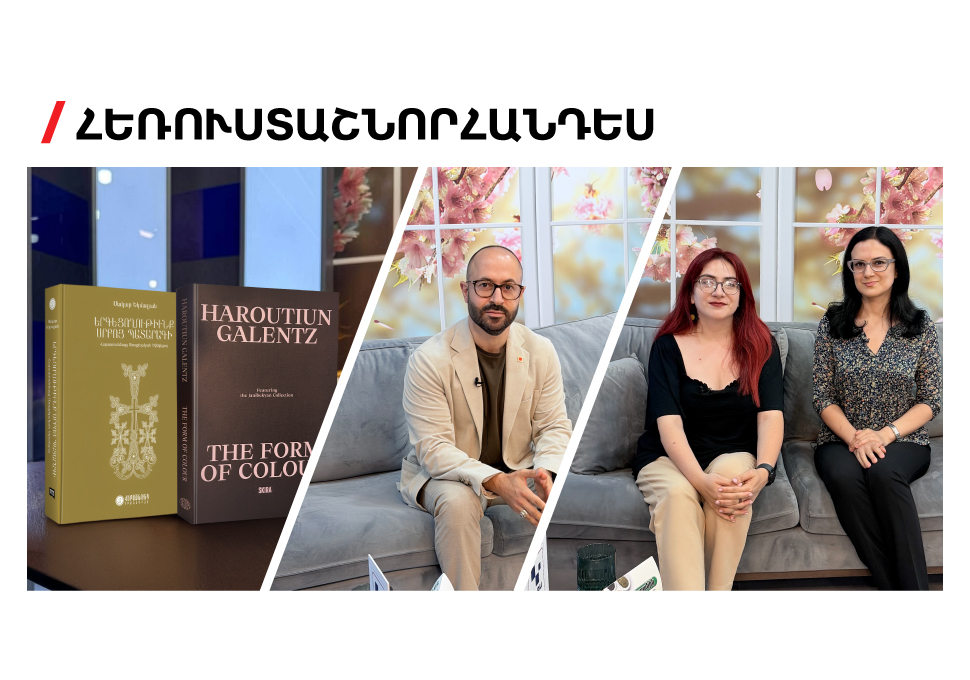
On Armenia TV's “Good Morning” program, Newmag Publishing showcased publications highlighting the works of two internationally acclaimed Armenian talents. In collaboration with the Renaissance Foundation, Newmag reissued Makar Yekmalyan's book “Chants for the Liturgy of the Saints”, alongside “Harutyun Galentz: The Form of Colour” under the Newmag & Friends project line.
Makar Yekmalyan's Chants for the Liturgy of the Saints was presented by musicologist-medievalist and professional editor of the edition Gayane Amiraghyan, together with Lilit Harutyunyan, a researcher at the Komitas Museum-Institute.
Gayane Amiraghyan described Yekmalyan's work as a musical manual of exceptional value:
“First published in Leipzig in 1896, this work has remained one of our most requested and widely used musical texts for one hundred and thirty years. When Yekmalyan composed this masterpiece, Catholicos Khrimyan Hayrik issued an official encyclical authorizing its performance in churches.
It quickly gained widespread adoption across almost all Armenian churches, including those throughout the Russian Empire, and it remains the most frequently performed Liturgy to this day. Although reprinted several times over the years, previous editions were incomplete. The original work was written for three distinct vocal arrangements: three-part, four-part male, and four-part mixed choir - the latter being the most commonly printed. This complete edition includes all three versions."
The professional editor outlined the primary significance and key characteristics of the work:
"Yekmalyan had a background in religious education combined with advanced musical training in Saint Petersburg, allowing him to elevate traditional Armenian sacred music to European standards for the first time. Our sacred music is traditionally monophonic, whereas European music is polyphonic. Yekmalyan was the first to seamlessly blend traditional Liturgy melodies with European polyphony.
It was a bold undertaking executed with great mastery and subtlety. Remarkably, the book was first published in Europe by a renowned publishing house in Leipzig, which still operates today, where the musical score was set, while the Classical Armenian text was typeset by the Mechitharist Congregation.
After being out of print for many years, its first major re-edition was initiated by the Renaissance Foundation in 2017, and it has now been reissued through the joint efforts of the Renaissance Foundation and Newmag."
Lilit Harutyunyan, researcher at the Komitas Museum-Institute, emphasized the publication's broad utility:
"The Liturgy text is bilingual, presented in Armenian and English, complete with transliteration, a crucial feature for diaspora educational centers to ensure accurate performance of the Classical Armenian chant. The book includes musicological commentary, an introductory overview of the Liturgy, an editor's note, and an analytical essay tailored for professional circles."
Another major release compiled by art historians Vardan Karapetyan and Marie Tomb, “Harutyun Galentz: The Form of Colour”, was published by Skira Publishing and presented in Paris. Following the launch of the art volume, a conference dedicated to the master Armenian painter Harutyun Galentz was held at Ca' Foscari University of Venice. Art historian, curator, and Director of Exhibitions at the Cafesjian Center for the Arts Armen Yesayants participated in the conference and shared insights on Galentz's artistic legacy during the television presentation:
"Any publication released by Skira carries monumental weight, making this a major milestone for our culture, as Galentz stands among the prominent figures of 20th-century visual art deserving of global recognition. Interest in his work gained renewed momentum in the late 2000s when his son opened the Galentz Museum in Yerevan, followed by several major exhibitions.
The Skira publication features Artur Janibekyan's personal Galentz collection, critical essays, as well as family and archival documentation. The monograph was compiled on the initiative of art historian Vardan Karapetyan."
Armen Yesayants also commented on the rationale behind the book's title, Harutyun Galentz: The Form of Colour. According to the art historian, color and form are often treated as distinct elements, yet Galentz used color to impart volume and depth to the canvas:
"Galentz transforms color into form. Through every gestural brushstroke and sculptured tone, he builds volume; upon a flat, two-dimensional surface, we observe images rich in three-dimensional chromatic depth. Galentz's use of color shifts, assuming form and revealing new content."
In compiling the book, Vardan Karapetyan and Marie Tomb included previously unpublished correspondence with writers and scientists whom the artist met through the chemist Artem Alikhanian. The volume also features two portraits of Maya Plisetskaya. According to Yesayants, the publication reflects an extensive body of analytical research:
"Galentz moved to Armenia from Lebanon during the repatriations. Before relocating to his homeland, he was already an established painter. He is often characterized as a non-conformist; within the Soviet context, political non-conformism referred to liberal, independent artists whose work remained free of propaganda, socialist realism, and rigid formal constraints.
After relocating to Armenia in the 1940s, the painter experienced a ten-year hiatus in his creative output, unable to paint as he confronted strict Soviet realities. His most prolific period flourished only after Stalin's death, following the end of the cult of personality. He passed away at the age of 57 at the height of this vibrant creative phase."
Yesayants noted that the publication of this volume once again highlights the growing international interest in 20th-century Armenian fine arts. While Armenia is widely recognized globally for its medieval architecture, miniatures, and khachkars (cross-stones), Harutyun Galentz: The Form of Colour presents Armenian art within a modern context.
Share


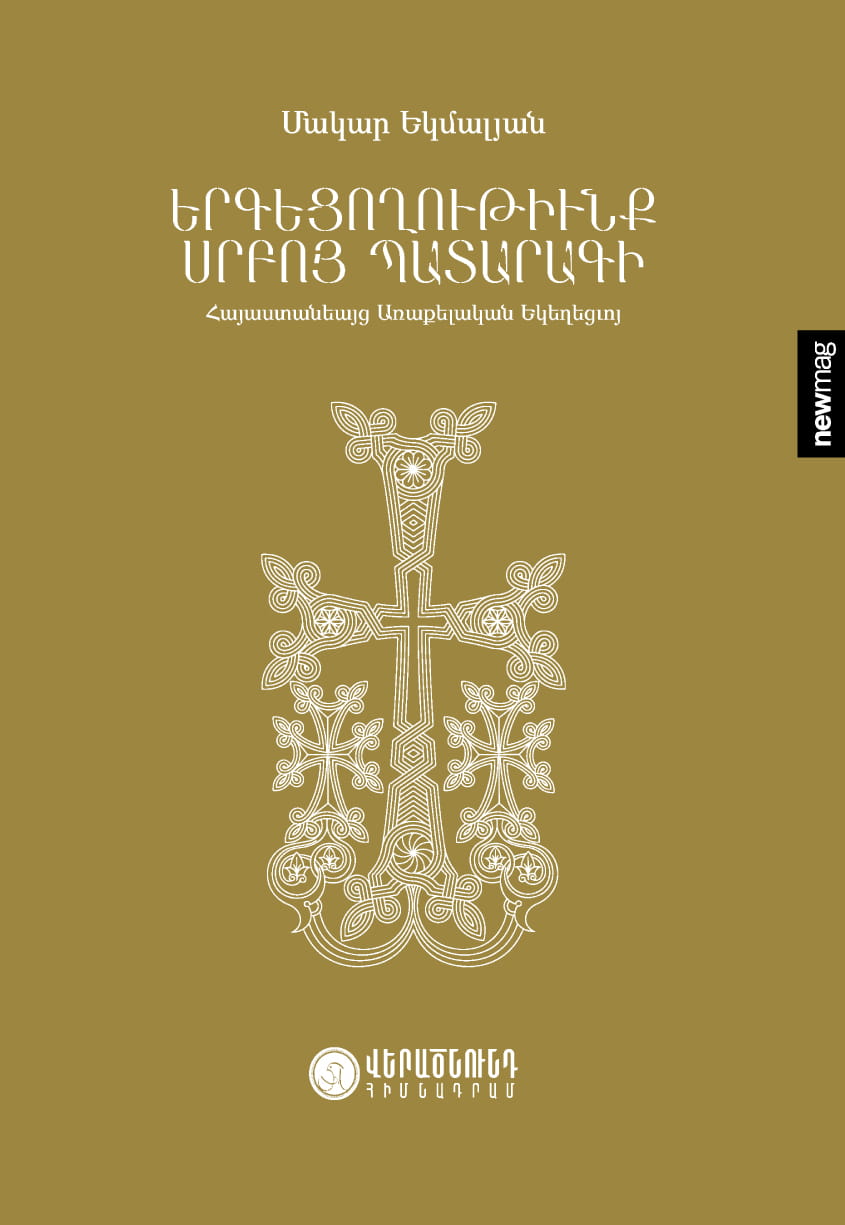
Makar Yekmalyan
10800 ֏
Description
This book is a reprint of the 2nd edition of the “Liturgy” by Makar Yekmalyan, a major composer of the period of the formation of the Armenian national compositional school, published in 1896 by the “Breitkopf and Hertel” publishing house in Leipzig and the Mikhtarian Congregation in Vienna. This work by Makar Yekmalyan is the first polyphonic example of liturgical hymns in Armenian reality, which was accepted into the official singing of the Armenian Church by the patriarchal decree of Catholicos of All Armenians Mkrtich A. Khrimyan (Khrimyan Hayrik).
Over the following decades, it became the accepted version of liturgical hymns. Even today, this volume by Yekmalyan is in great demand among church musicians. This work was highly appreciated by many prominent foreign musicians in its time, and it was warmly welcomed by Kristapor Kara-Murza. Leaving aside the discussion of purely professional issues, Komitas Vardapet also particularly valued his teacher’s “Liturgy.”
The “Renaissance” Foundation is republishing this book in memory of the great Armenian composer Makar Yekmalyan and in service of the spiritual service of the scholastic classes of the Armenian Apostolic Holy Church.
Due to the high editorial level and scientific basis of the publication, it can also be addressed to musicologists and music researchers.
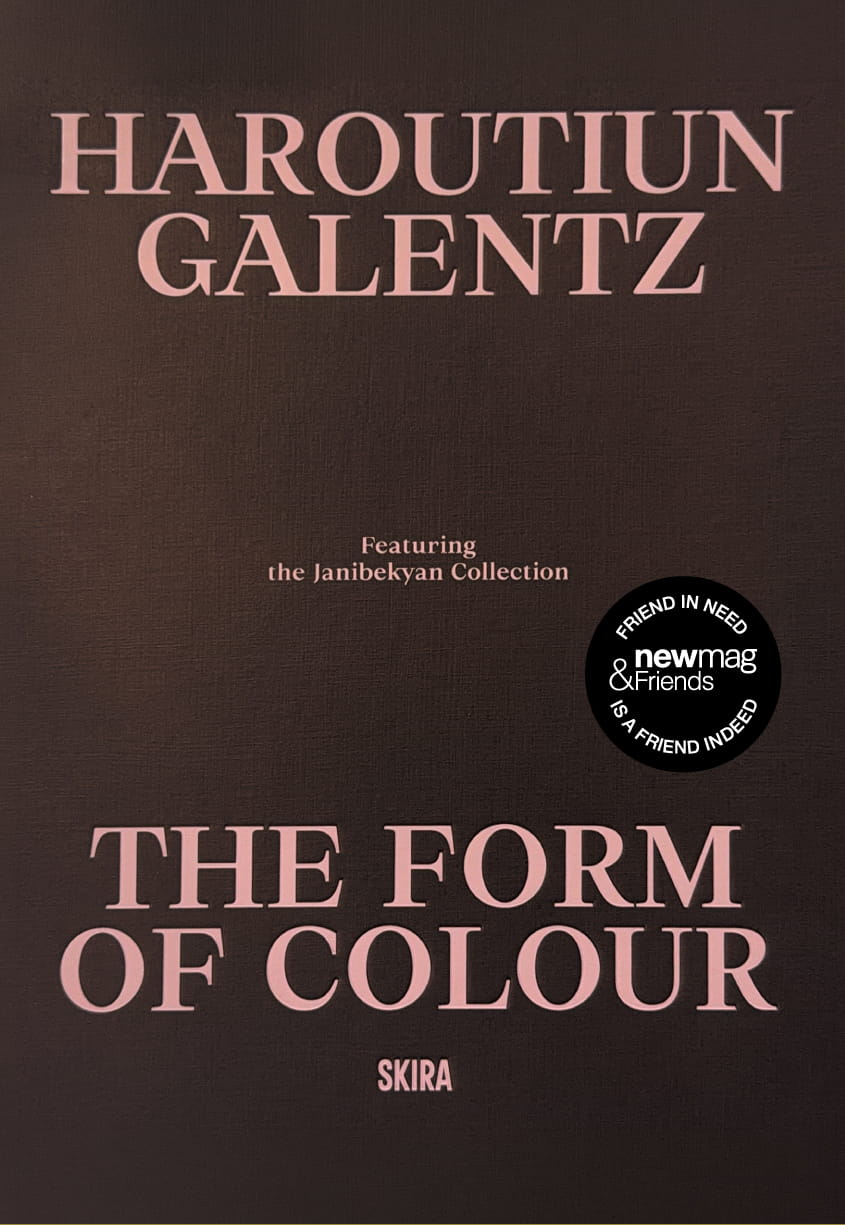
Newmag
14800 ֏
Description
Harutyun Galentz is one of the most original and least discovered artists of Armenian fine art of the 20th century. His creative path stretches from Lebanon to Armenia, passing through a childhood that survived the genocide, the cultural life of Beirut, the ideological restrictions of Soviet art and international recognition.
This book tells not only about the life and art of the great artist, but also about an entire era. Editors Vardan Karapetyan and Marie Tomb, relying on previously unexplored archives, personal correspondence, family memoirs, museum and private collections, reconstruct Galentz’s biography, revealing his creative searches, ideological struggle, international ties and the human world.
The book presents more than 150 works, sketches, exclusive documents and photographs of the artist, giving the reader the opportunity to get to know Galentz’s art in a new way, understand his role in the history of Soviet non-conformist art and appreciate the universal value of his legacy.
This is not only a biography of a great artist, but also a story about memory, cultural identity, and artistic freedom, which redefines Harutyun Galents' place in Armenian and world art history.
Read also

Presentation of the Book "Supercommunicators" Took Place at the Initiative of Newmag and Acba Business Club (Photos)
The TV presentation of Ara Zargaryan’s book "Aksel Bakunts’s 'Mtnadzor'" took place (video)
Newmag Presents Literary Critic Ara Zargaryan’s Work "Aksel Bakunts’s 'Mtnadzor'" (Trailer)
Newmag Presents Charles Duhigg's New York Times Bestseller "Supercommunicators" (Trailer)