
The TV presentation of the global bestseller “The Anxious Generation” took place (video)
04/22/2026
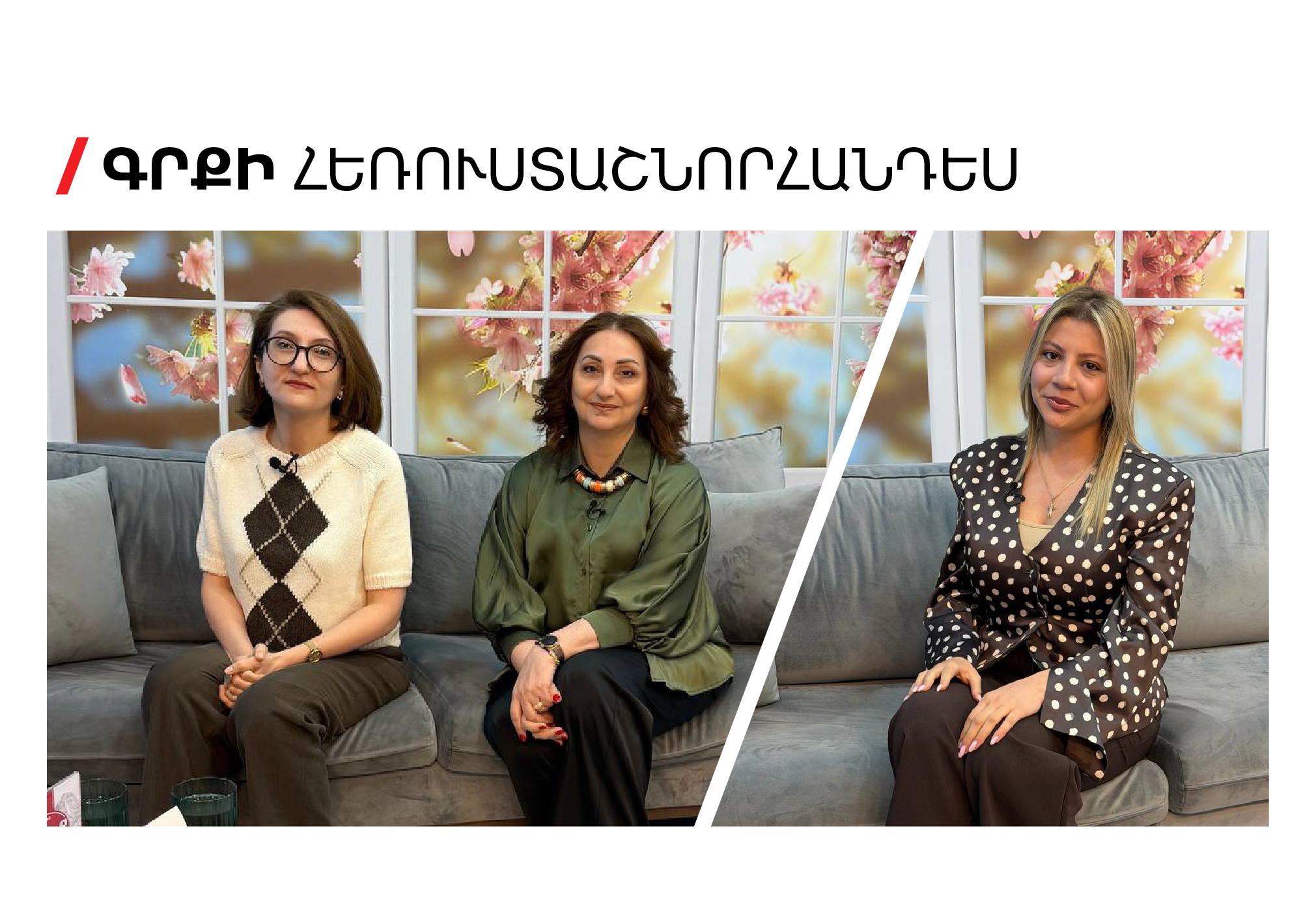
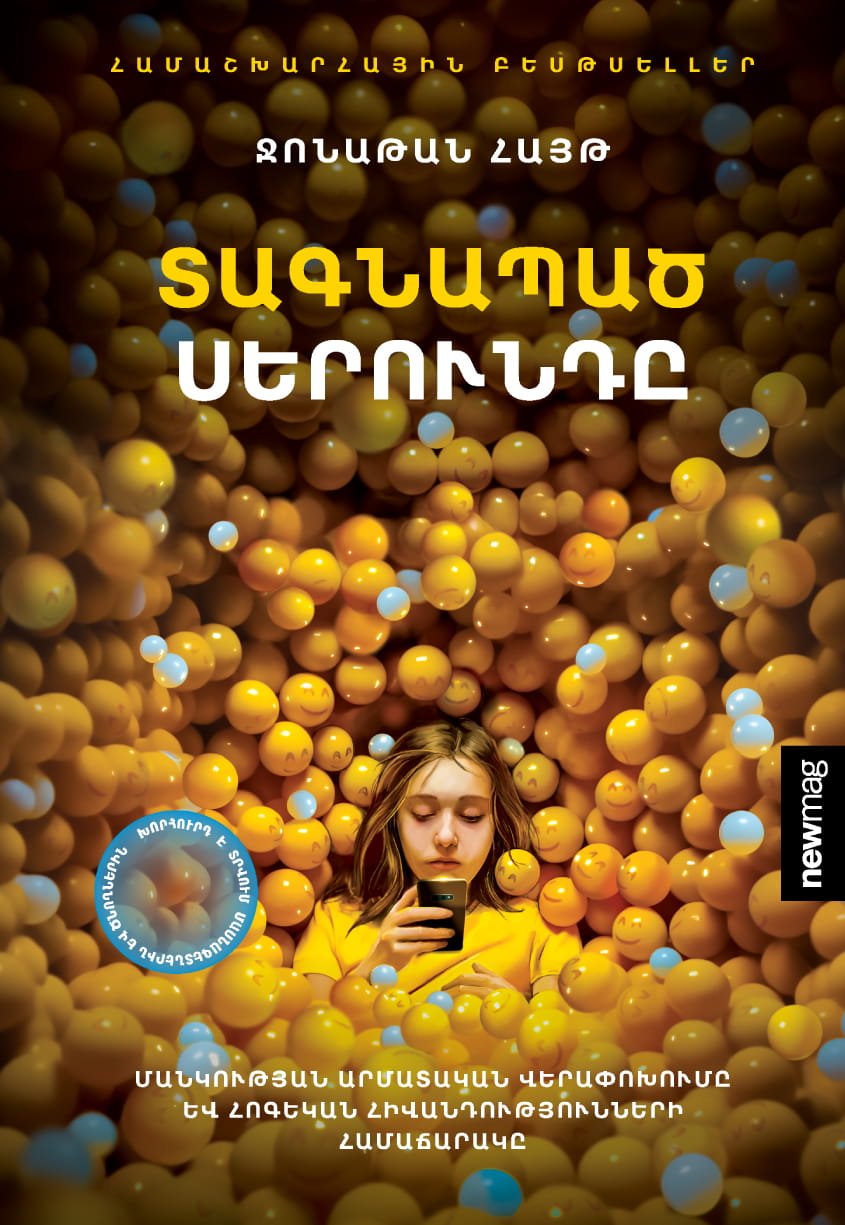
Newmag presented The Anxious Generation by Jonathan Haidt on the “Good Morning” program of Armenia TV. The main partner of the book is the Izmirlian Foundation. The author explores the impact of smartphones, social media, and video games on adolescent mental health, showing through extensive research that Generation Z has become an increasingly anxious generation.
At the beginning of the book, Haidt uses a striking metaphor: we have sent our children to Mars, into an unfamiliar environment where they do not know how to survive. By the end of the book, he returns to this idea, suggesting that today we are all living in a new, unfamiliar reality.
Nane Manukyan, the book’s translator and Head of Corporate & Global Partnerships at Newmag Publishing House, notes:
“The modern world is full of risks, and it is especially dangerous for children and teenagers. Haidt explains generational differences not only through wars or global crises, but also through the technological shift. One of the key points of the book is that the rise in depression, anxiety, and self-harm among teenagers cannot be attributed to social media alone.
In real life, parents have restricted children’s independence and physical movement, while in the digital world, they have left them largely unprotected. Since the 2010s, we see widespread sleep deprivation, shorter attention spans, and increasing addiction. Today, children spend an average of seven hours a day in front of screens, excluding schoolwork.”
Despite the alarming data, the book also offers solutions. As Manukyan emphasizes:
“The author addresses parents, schools, governments, and tech companies, offering concrete steps for each. Parents and schools should create phone-free environments, while governments should introduce legislation defining the age of digital adulthood, around 16. For example, Australia has already moved in this direction.”
Editor Tatevik Baghdasaryan, speaking from personal experience as a parent of a Generation Z child, highlights the everyday reality behind these findings:
“I would see that my daughter was home and feel reassured. But then I noticed she was sleeping less, her attention was scattered. She struggles to focus on longer texts and can concentrate on something for only about thirty seconds, the length of a typical social media video.”
One of the most striking revelations for the editor was the role of digital corporations:
“It is alarming to see how consciously some companies prioritize business interests over children’s mental health. There are documented cases showing that they understand the neurological vulnerability of young users and still design systems that foster dependency.”
Psychologist Anush Aleksanyan confirms these observations from her professional practice:
“Everyone sees that a play-based childhood has turned into a screen-based one. Parents are understandably concerned about physical safety and limit children’s independence outdoors, but at the same time, they allow significant freedom in the digital space, often without fully understanding its risks.”
Haidt argues that the decline of play-based childhood has led to a loss of independence and resilience:
“In the past, children were trusted to explore, take risks, and learn through experience. Today, that freedom is limited, especially for boys, and this has long-term consequences for development.”
The book offers clear recommendations: governments should regulate digital environments and protect children’s interests, schools should implement phone-free learning spaces, and teenagers should be encouraged to build real-life social connections. According to the research presented, children can begin using smartphones with restrictions around age 13, while access to social media should be delayed until at least age 16.
The Anxious Generation is both a warning and a practical guide, urging society to rethink childhood in the digital age and to act collectively to protect it.
Share


Jonathan Haidt
7800 ֏
Description
In the 2010s, adolescent mental health deteriorated sharply across many countries, with significant rises in depression, anxiety, self-harm, and suicide. What changed during that decade? Social psychologist Jonathan Haidt addresses this urgent question by examining how childhoods once centered on play gradually became dominated by smartphones, social media, and digital immersion.
Drawing on extensive research, Haidt explores how this shift has affected children’s social and neurological development, contributing to sleep deprivation, social isolation, fragmented attention, and addictive behaviors. He also outlines practical and actionable steps for parents, schools, technology companies, and governments to help confront this crisis and restore healthier, more human-centered childhoods.
Generation Anxiety is a compelling call to reclaim a more balanced and humane life for the next generation—and, ultimately, for society as a whole.
Read also