
“Escape from Ergir”. Turkey has never doubted that Armenia is its enemy, Armenians are the main danger and target of it
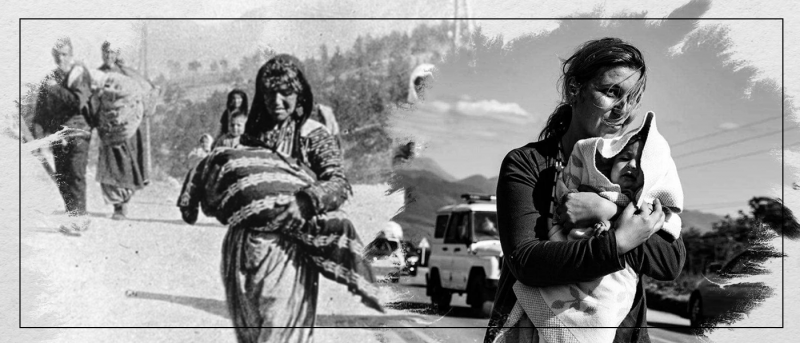
What was the fate of the Armenians who remained in Turkey after the Genocide and how did some of them manage to escape from Ergir? The book “Escape from Ergr” authored by Ruben Melkonyan and Naira Poghosyan is the first work that deeply studied the fate o
It is noteworthy that both Turkish and Azerbaijani historians consider repatriation as a method of forming the “Armenian homeland”, of course, in a negative sense and with an obvious tendency to distort reality. Turkish historian Nasrullah Uzman sees repatriation as a manifestation of the USSR's desire to gain new territories and specifically emphasizes that for this purpose, Russia “tried everything, even tried to win Turkish citizen Armenians over to its side by offering to move to Armenia”.
Hacettepe University professor A.S. Arygh highlights the 1945 election of the Catholicos of All Armenians and especially the participation of Archbishop Gevorg Arslanyan, the patriarchal vicar of Constantinople, and his statement upon his return that “Soviet Armenia is paradise”.
Azerbaijani historian Gaffar Chakmakli Mehdiyev considers the 1946-48 repatriation as a part of the Russian project of the Armenianization of the South Caucasus, starting in the 1813 Gulistan and 1828 Turkmencha treaties.
We tend to call “repatriation” these events that happened in the 1920s-1930s and after that. It best expresses the importance of the return of the Armenians and their descendants who escaped the Armenian Genocide. This is a symbolic act of rebirth, not only and not so much political, but spiritual, and cultural.
Deporting the Armenians, the Turkish government pushed them to Syria, Lebanon, and not to Soviet Armenia. In other words, their goal was the removal of the surviving small groups of Armenians from Turkey especially from the territory of historical Armenia, but the resettlement of these people in Soviet Armenia was unacceptable to the Turkish government and contradicted their political goals. We cannot exclude, and moreover, it seems very realistic, that the Armenians who appeared in Syria or Lebanon at that time or later were able to move to Soviet Armenia because it was much easier to immigrate to the USSR from those countries.
Perhaps the main thesis of Turkey: “the years will soften the old wounds, will eliminate the inter-ethnic enmity of the two countries” is bankrupt. This book shows that Turkish Armenians were persecuted not only in 1915, but for decades. Turkey has never doubted for a minute that Armenia is its enemy, Armenians are the main danger and target. And that state is responsible for the mutilated destinies of Turkish Armenians who are considered its citizens. They were persecuted, forced to migrate, starved, converted, humiliated, dispossessed and destroyed for a whole century. The means, formulations, and methods have changed, but the attitude is the same. The Turk has not changed.
The book “Escape from Ergir” contains the exclusive conversations of Turkish Armenians and their descendants, which represent the trauma of the Genocide to the process of ghettoization in Armenia, that the repatriates went through.
Share


Read also