
Newmag Presents Jáchym Topol’s Novel “The Devil’s Workshop” (Trailer)
03/13/2026
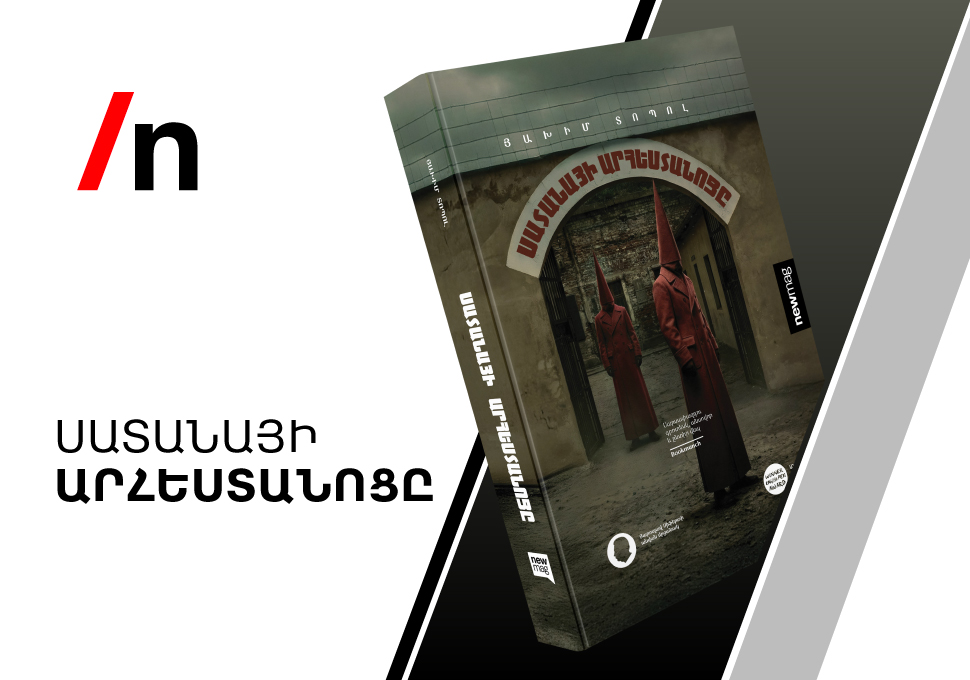
Newmag introduces the gripping novel "The Devil’s Workshop" by Czech author Jáchym Topol, a dark grotesque tale exploring memory, tragedy, and the commodification of human suffering.
The story is set in the town of Terezín, a place built upon the graves of victims of Nazi concentration camps. Its residents grow cabbage, breed goats, fall in love, and live ordinary lives amid extraordinary history. One day, a wild and ultimately lucrative idea emerges nearby: to transform the entire town into a living Holocaust museum. Topol’s novel examines how collective pain and memory can be easily converted into a commercial product.
Terezín is a place where no one should have lived. During World War II, it was turned by the Nazis into a Jewish ghetto and transit camp. Tens of thousands of people, mostly Jews, passed through Terezín on their way to Auschwitz and other extermination camps. Many perished there due to disease, starvation, or torture.
After the war, life returned. People came back, or new generations grew up in the same streets and houses. Kitchens were built atop bunkers, gardens planted beside mass graves. Topol’s novel portrays the lives of these residents, living on the soil of unimaginable suffering.
At its core, The Devil’s Workshop confronts a profound question: how should humanity deal with the horrors of the past? Should the ancient pain be forgotten, or should everything be displayed exactly as it happened?
About the Author
Jáchym Topol is a key figure in contemporary Czech literature, both a poet and prose writer. Born into a literary family, he began his career in the 1970s as a rock lyricist. Due to his dissident activities, including signing Charter 77, he was persecuted and imprisoned by the authorities. After the Velvet Revolution, he founded the weekly newspaper Respekt. In the 1990s, he transitioned from poetry to postmodern prose. The Devil’s Workshop has been translated into over 20 languages and is considered one of his most influential works.
About the Novel
The novel depicts Terezín as it transforms from a ghost town into a Holocaust museum. The noble desire to preserve history gradually turns into a profitable business, where memory itself becomes a commodity. When the protagonist is tasked with executing a similar project in Belarus, the story takes a satirical and grotesque turn. Dark humor saturates the narrative, creating an anti-utopia that explores how human tragedy is converted into a commercial brand.
In a conversation with Newmag, Topol reflected on Armenia, noting that the book’s themes would resonate with Armenians:
“I truly admire Armenia, a country with a rich culture and courageous, determined people. My impression of it comes through literature, particularly Franz Werfel’s The Forty Days of Musa Dagh, which vividly portrays one of the most tragic periods of Armenian history, the genocide.
My book is thematically close to that tragedy but written as a grotesque with dark humor. It tells the story of the people living in Terezín today.
Essentially, it is an anti-utopia. I wanted to show what happens when memory and tragedy enter the market. No one funds the Belarusian tragedy, raising the question: what do we remember and what do we forget? I believe that Armenians, with their rich cultural traditions and tragic history, will deeply understand this book, which confronts one of humanity’s most horrific chapters.”
Critical Reception
The Guardian praised the novel: “The dark humor and irony are so dense and oppressive that it takes your breath away.”
The Armenian translation was done by Mariam Mansuryan.
Share


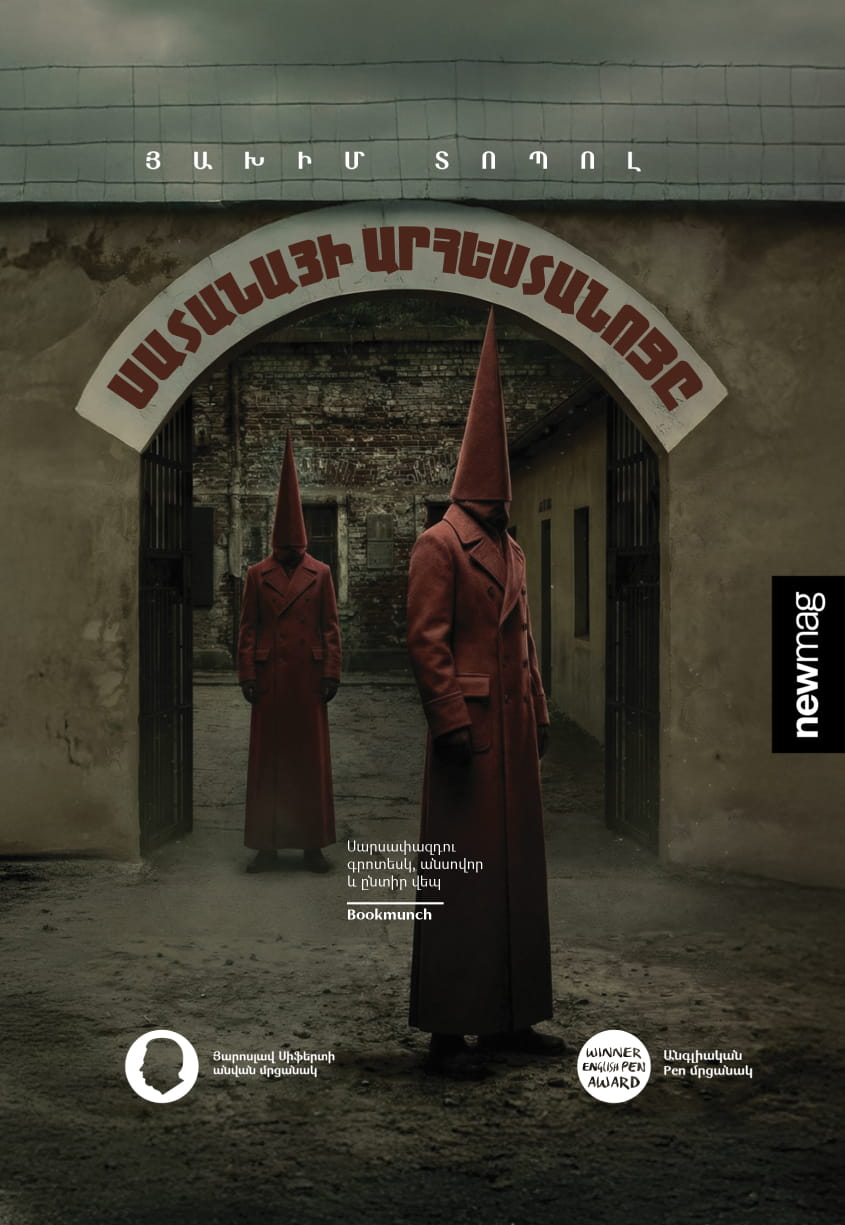
Jáchym Topol
5800 ֏
Description
The Czech city of Terezín was once a concentration camp, where tens of thousands of people were tortured and killed. Now it is a ghost town; everyone is abandoning it. But a devoted citizen of Terezín, Lebo, intends to preserve the city as it was, to turn it into a Holocaust museum, to save every wall, every sleeping sickness, every basement, every writing on the walls. But the noble desire to preserve the past soon becomes a profitable business, horror is sold as a spectacle, memory as a commodity. When the main character of the novel is forced to create a similar museum in Belarus, in the places of forgotten genocides, the story takes on a satirical, dark and phantasmagoric tone, the pain of humanity is easily transformed into a commercial brand. It is a grotesque, blackly humorous dystopia, a powerful contrast between universal tragedy and humanity.
Read also