
TV Premiere of the Book “Hrazdan Stadium: A Masterpiece of Soviet Modernism” (Video)
05/02/2025

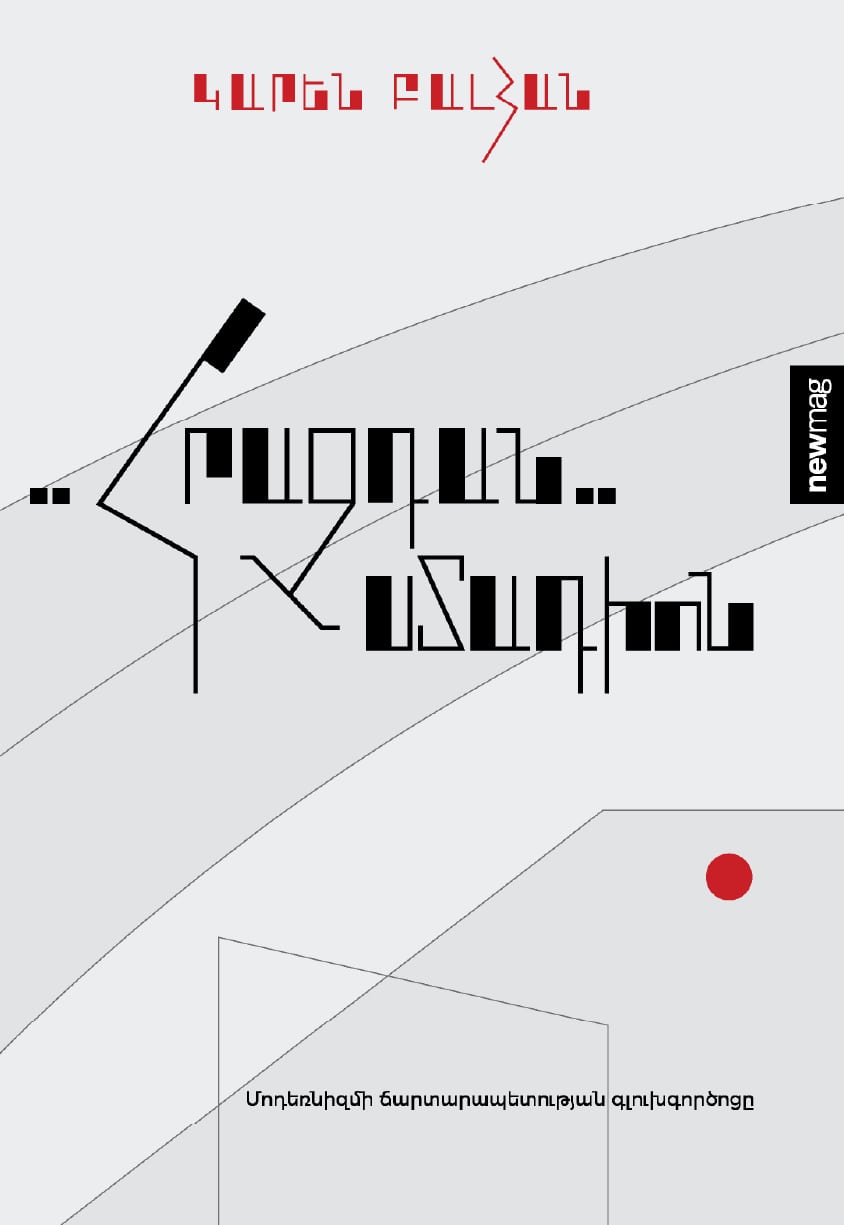
Newmag Publishing House presented “Hrazdan Stadium”, a new book by Professor Karen Balyan, during the “Good Morning” program on Armenia TV. The book explores one of the most iconic architectural achievements of the Soviet modernist era, Yerevan’s Hrazdan Stadium.
Designed by architects Gurgen Musheghyan and Koryun Hakobyan, Hrazdan is considered a landmark of Armenian modernism. The book was published with the support of Gurgen Musheghyan’s family. His daughter, pianist and composer Araksya Musheghyan, emphasized that the stadium was deeply personal for her father, it was his diploma project and one of the proudest accomplishments of his career.
“Hrazdan has always been ranked among the best stadiums. Prestigious architectural journals have written about its uniqueness. This is not a structure we can afford to lose. Hrazdan is still capable of serving a purpose today. The book will also be valuable for young architects, offering them insight into the legacy and vision of a dedicated generation,” she said.
The book includes an appendix featuring Gurgen Musheghyan’s articles, interviews, and publications about the stadium. Built during the Soviet era under considerable pressure, the project required convincing officials that a stadium of such scale was necessary for a city the size of Yerevan. Ultimately, it was built and became a source of national pride.
Professor Karen Balyan, a member of the International Academy of Architecture and an expert on modernism, described Hrazdan as a globally recognized structure within professional circles.
“This massive complex blends into the Hrazdan Gorge so harmoniously that it continues to impress architects with its artistic and urban planning excellence.”
He also noted that many European countries still use stadiums of the same era or even older, having restored them to meet international standards.
“Hrazdan is an Olympic-class stadium. It’s not just for football, many types of sporting events can be held here. Of course, infrastructure like the pitch, lighting, and locker rooms need updating.”
Balyan emphasized that the goal of the book goes beyond documentation, it is a call to preserve this historic structure. During the presentation, attendees symbolically signed a copy of the book “in defense and preservation of Hrazdan Stadium.”
One quote in the book especially stands out, from legendary Ararat-73 footballer Eduard Markarov:
“I’ve played in many stadiums, some better, some worse, but there’s nothing like Hrazdan. It was impossible not to win there.”
Share


Karen Balyan
10800 ֏
Description
Karen Balyan's new book is a tribute to one of the crowning achievements of Armenian modernist architecture—the "Hrazdan" stadium, a landmark built during the vibrant and ideologically charged decades of the 1960s and 70s.
Set against the backdrop of the Soviet Union’s "thaw" era and the awakening of Armenian national consciousness, the book traces the genesis, design, and construction of the "Hrazdan" stadium—an architectural marvel nestled on the slopes overlooking the Hrazdan River. Completed in just 18 months between 1970 and 1971, and made possible by the financial support of the Calouste Gulbenkian Foundation, the stadium opened its doors on May 19, 1971. At the time, it was one of the largest and most ambitious sports arenas in the USSR.
Today, the "Hrazdan" stadium still stands, majestic and awe-inspiring. Yet it no longer serves its original purpose, and plans for its demolition threaten to erase another emblematic work of Soviet Armenian modernism. Like many masterpieces from that era, "Hrazdan" risks disappearing before our very eyes—taking with it a piece of Yerevan’s soul and architectural heritage.
Karen Balyan’s book seeks to rescue this legacy from oblivion. Through detailed historical research and evocative narrative, it documents the vision and ingenuity of the stadium’s creators. If the physical monument cannot be saved, then its story—its symbolism, its significance, its triumph—must be preserved on paper. This book becomes an archive of imagination, an homage to an era, and a final tribute to a modern legend.
Read also