
Newmag presented the memoir “Letters from Paradise, Where No One Was” on Armenia TV's “Good Morning” program
04/02/2026
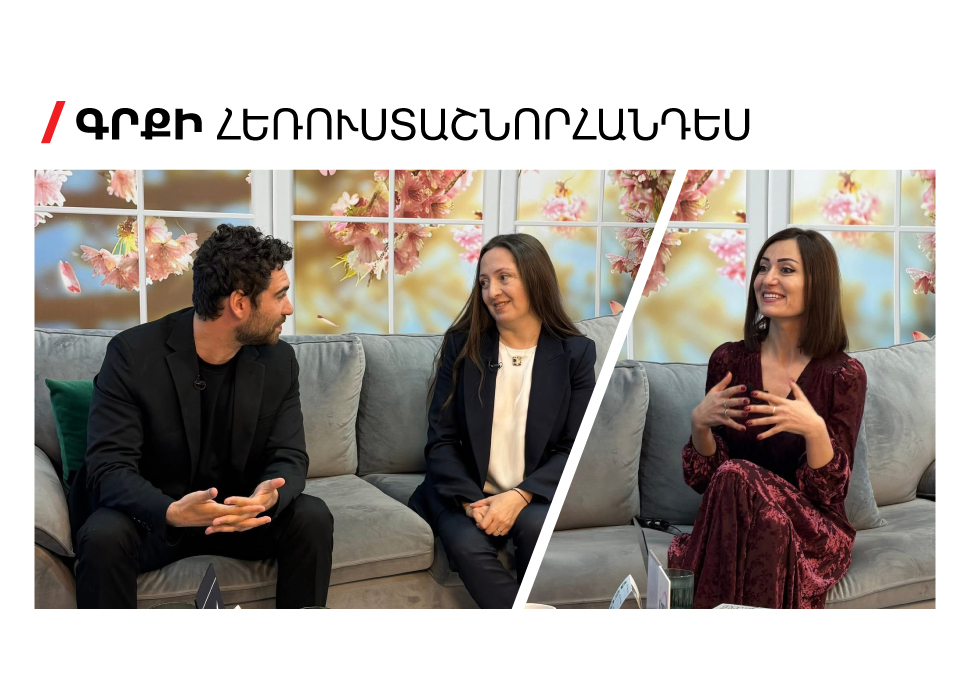
The authors and translator of the book were present during the broadcast. Artsakh-based writer and poet Hermine Avagyan and French journalist and composer Ulysse Manhes jointly created the correspondence that later became the book, titled “Letters from Paradise, Where No One Is.” The translation was carried out by Lilit Bleyan, with editorial work by Vahagn Atabekyan. The foreword was written by French philosopher and writer Pascal Bruckner.
The correspondence began during the blockade and wartime period in Artsakh. The initiative itself was launched by Ulysse Manhes. He explained that his friend Hovhannes Gevorgyan introduced him to former Artsakh Minister of Culture Narine Aghabalyan, who suggested that he write to Hermine Avagyan. That suggestion led to the first letter:
“Initially, this was supposed to be an article. I write and prepare reports about small nations, countries, and cultural minorities within large empires. One day in Paris, in a small Armenian restaurant, a friend from Artsakh told me that I would find Artsakh very interesting. I became curious, got acquainted with Hermine, and we began writing letters to each other.”
According to Ulysse Manhes, the book emerged after a year and a half of continuous correspondence. He also traveled to Armenia to take part in the book presentation, joking that he dressed “like a qyartu” for the occasion.
Reflecting on his impressions, he shared:
“When I first came to Armenia, I felt a deep connection that I had already sensed. As a Frenchman, I understood that I had something to do here, although I didn’t yet know what. I discovered an atmosphere of joy, peace, and humor, despite the tragic history of the Armenian people. I am already working on a new book about the Caucasus region. Ideally, I would learn Armenian, but it is a very difficult language.”
Translator Lilit Bleyan noted that this correspondence stands apart from typical works about Artsakh:
“Usually, Artsakh is presented through political history, conflict, and confrontation. This book, however, is filled with emotion and beauty. Hermine describes Artsakh delicately, poetically, and sincerely. The result is a genuine dialogue full of longing between two strangers.”
Co-author Hermine Avagyan emphasized the unexpected nature of the initiative. In 2023, when the road connecting Armenia to Artsakh was closed, she was in Yerevan and unable to return.
“All my relatives, including my mother, remained in Artsakh,” she recalled. “In the spring, Narine Aghabalyan called me and told me about the correspondence project. At first, I thought it was not right for me to write while being away from Artsakh. But then I realized how much I needed to speak about it.”
She described the process as deeply therapeutic:
“The accumulated longing and sense of powerlessness found their way into these letters. In his first letter, Ulysse asked me to tell him about Artsakh. I began with memories of the first Artsakh war, but I did not want to write only about pain. I also wrote about childhood-about Artsakh children’s dreams, their desire for dolls, play, chocolate, and ice cream, things that were not always available.”
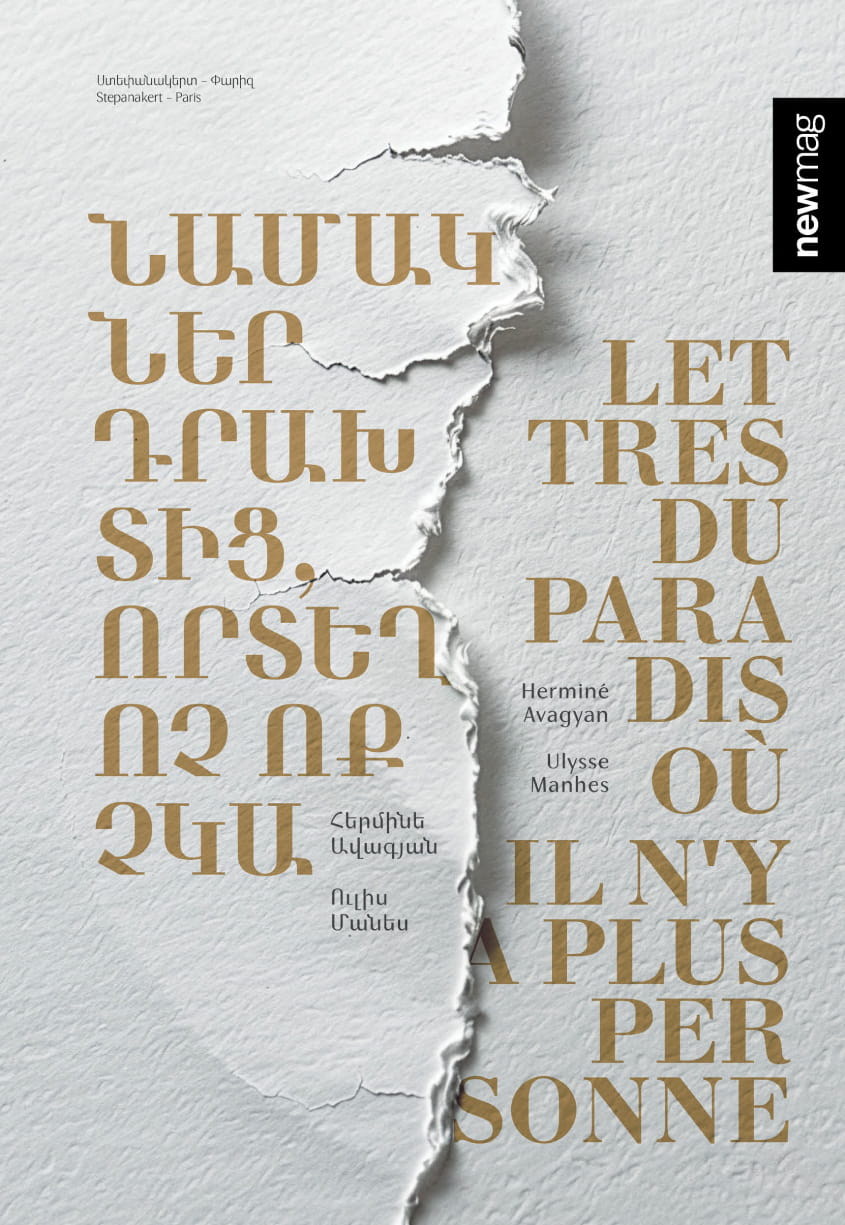
One of the lines in the book, written by Hermine, reads: “Today I received a letter from heaven; it was God who said there is no one there anymore.” Editor Vahagn Atabekyan suggested using this line as the title. Hermine added that her thoughts and inspiration have always remained tied to the same place she signs her letters from: Martuni, Ashan, in Artsakh.
Share


Hermine Avagyan
Ulysse Manes
6800 ֏
Description
This correspondence is a literary bridge between two worlds: that of French musician and journalist Ulysse Manhes, and that of Artsakh writer Hermine Avagyan. On one side stands Ulysse’s curious gaze, both unfamiliar and deeply attentive; on the other, Hermine’s vanished homeland. With poetic breath and the delicate threads of memory, Hermine guides Ulysse along the hidden paths of Artsakh—where the hues of childhood and the scents of her native village blend into the haze of war.
This book is also a chronicle, woven from Hermine’s luminous longing and Ulysse’s love for the Armenian people. It is a conversation about how the word becomes a homeland when the land itself is no longer beneath one’s feet, and how the meeting of two foreign souls can turn into a book that will live beyond time and across distance.
Read also