
Where and at what moment did we make a mistake and why do we repeat it? Excerpts from the book “The Armenian Price of Peace”
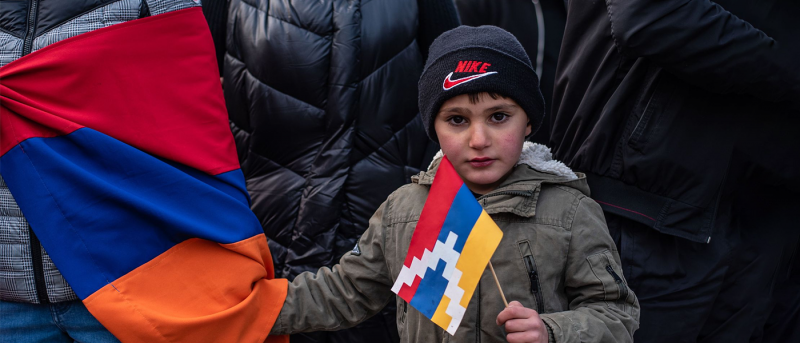
Naira Sahakyan, the author of “The Armenian Price of Peace” presented the ideas of Armenians about the right to self-determination 100 years ago and today. What has changed? The Armenian thought was inspired by European values 100 years ago. It was social
The Armenian Price of Peace... Speaking about Armenians and nationalism, American-Armenian historian Ronald Syuni notes that the Armenian national identity, which was first based on Armenian Christianity, is developing as a modern one. Armenians have not been the same throughout their history. Armenians are people who have the consciousness of being Armenians.
Being Armenian, on the one hand, is the urge to remember a part of the past of the given generation and lean on it, on the other hand, the desire to forget and ignore a certain part of that same past. In other words, Armenians are reinterpreting their past and therefore the components of their national identity depending on the challenge. An active period of that transformation was the early 20th century.
... Research on the issues of perception of the homeland and nation-building among the Armenians offered new approaches. In his article “Home" away from "home", Ottoman Armenian Refugees and the Limits of Belonging to Soviet Armenia", historian Aishenur Korkmaz from the University of Amsterdam shows how the “Ergir” spatial image was formed among Armenians who survived the Genocide and found a home in Soviet Armenia, which outlined the symbolic “Armenian homeland”. Although they create a home in Soviet Armenia, their emotional attachment to their vanished “home” continues, which was now summed up in the term "Ergir".
History is about not repeating the same mistakes. Armenian intellectuals 100 years ago were educated, and aware of political issues. They understood all the risks, their capabilities, and the need to dodge between empires. And as today, 100 years ago they had to decide what to do with the “right of self-determination”. And like today, they were aware of potentially dangerous developments.
But the First Republic lasted only 2 years, Armenia was deprived of Artsakh and Nakhichevan. The fate of these mostly Armenian-populated regions was decided without Armenians. In 1920, Armenia lost its sovereignty. 100 years later, in 2020, Armenia lost a war of existential, vital significance. In 1923, Nagorno Karabakh came under the control of Azerbaijan. What will happen in 2023? The main question of this book and the last 100 years is the same: where and at what moment did we make a mistake and why do we repeat it?
Share


Read also