
The state is a huge thing. Arman Saghatelyan, from the book “The Nerve of Life”
“The Nerve of Life” is about the events unfolding in the most fateful period of our recent history. The autobiographical novel presents the Armenia of the 90s, the victorious struggle for existence, and the life of the country in uncertainty. We have sing
Most of all, it was unclear to me how the newly found “rally leaders” were going to raise the country. After all, it was an enviable historical opportunity to acquire a state, which had not happened for a long time. Our former state was one of the most powerful in the world. It had its serious flaws, but for better or for worse it was a system. Acting on the principle of “demolish it, then we'll see how we build it” seemed to me to be quite a dubious undertaking. Managing a state, without the necessary culture and skills, is not speaking from the tribune, or even trading vouchers or closing factories, then privatizing them, and finally turning them into scrap metal and selling them to Iranians. The state is a huge thing.
And as much as knowledge, you need culture and will even more so that do not destroy and waste everything that the previous generations have created and left you as a legacy. But these questions were probably not of interest at that time. And if they were interested, it practically did not affect the development of events. Everywhere and in whatever way they could, everyone was abolishing the previous system and probably thinking about what to do with the huge wealth that belonged to a state that no longer exists, saying that it does not belong to anyone. The reasons for the existing problems were clearly explained to the people. “... Siege, war, destruction of the country...
What can we do?' None of them considered it necessary to answer that the problem was not the universal crisis, the insufficiency of food, money, energy carriers, and other material goods, but how reasonably and fairly they distribute at least what they have. The situation on the borders and especially in Karabakh was fundamentally different. Issues were not decided by rallies there. It was a war. Brutal, uncompromising war. And if in Yerevan it was possible to freely implement one's ideas about “freedom and independence”, in Karabakh no one could afford it. It was necessary to fight. Fight to live.
There were serious problems in the establishment of the main state institutions; the solution to this problem could take decades, but the creation of the army could not be slowed down. It was the army, which started its formation from separate defense units, at that moment the only guarantors of statehood and security.
Fortunately, the nation's historical memory worked, thousands of people changed their peaceful and ordinary work tools and, forgetting and leaving everything in the world, put on military uniforms and took weapons in their hands. The spirit of great warriors awoke in them, which is special for our people in the fateful historical stages.
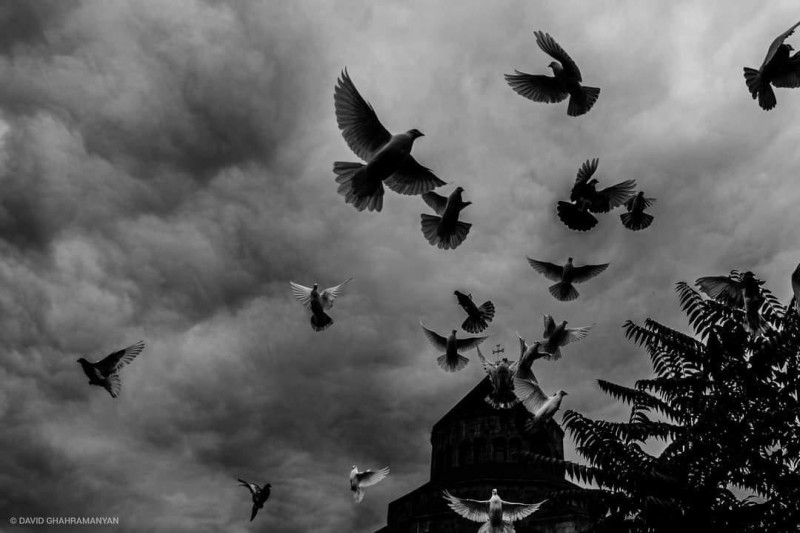
Photo: Davit Ghahramanyan
Share


Read also