
How to Become a Millionaire: 10 Lessons from "The Psychology of Money" (Video)
07/03/2025

In “The Psychology of Money”, author Morgan Housel argues that wealth has less to do with intelligence or talent and more to do with mindset. Surprisingly, even the smartest people can struggle with money—because financial success is less about knowledge and more about behavior.
1. Health and Money Rule Our Lives
Two forces constantly influence us, often beyond our control: health and money.
2. Luck Plays a Bigger Role Than You Think
Financial success often depends more on timing and luck than on hard work or strategic planning.
3. Behavior Over Knowledge
Getting rich isn't always about what you know—it’s about how you behave. Soft skills like patience, discipline, and long-term thinking often matter more than financial expertise.
4. Money Habits Are Deeply Personal
People handle money in wildly different ways. Why? Because we all come from different families, cultures, and economic backgrounds. What seems irrational to one person may be perfectly logical to another.
5. Your Past Shapes Your Financial Choices
Someone who grew up during inflation or financial crisis may avoid investing, while someone who lived through economic stability is more likely to take risks in the market.
6. Why the Poor Buy Lottery Tickets
In the U.S., people spend more on gambling than they do on movies, sports, video games, or books. And who buys the most lottery tickets? Those with the least money—hoping for a miracle, not a strategy.
7. Success and Risk Are Twins
When you’re at your peak, don’t forget that luck may have helped you get there—and risk could bring you back down. Understanding the role of chance keeps you humble and cautious.
8. Knowing When to Stop
True financial skill lies in knowing when enough is enough. The ability to stop chasing more—once your goals are met—is rare and powerful.
9. The Trap of Wanting to Spend
Most people who say they want to “be a millionaire” actually mean they want to spend a million. But real wealth is what you don’t spend. Wanting to spend a million contradicts the very idea of becoming a millionaire.
10. Wealth is Quiet, Spending is Loud
Money that isn’t flaunted is often the most powerful. The richest people are often the ones who live below their means—not the ones showing it off.
Share


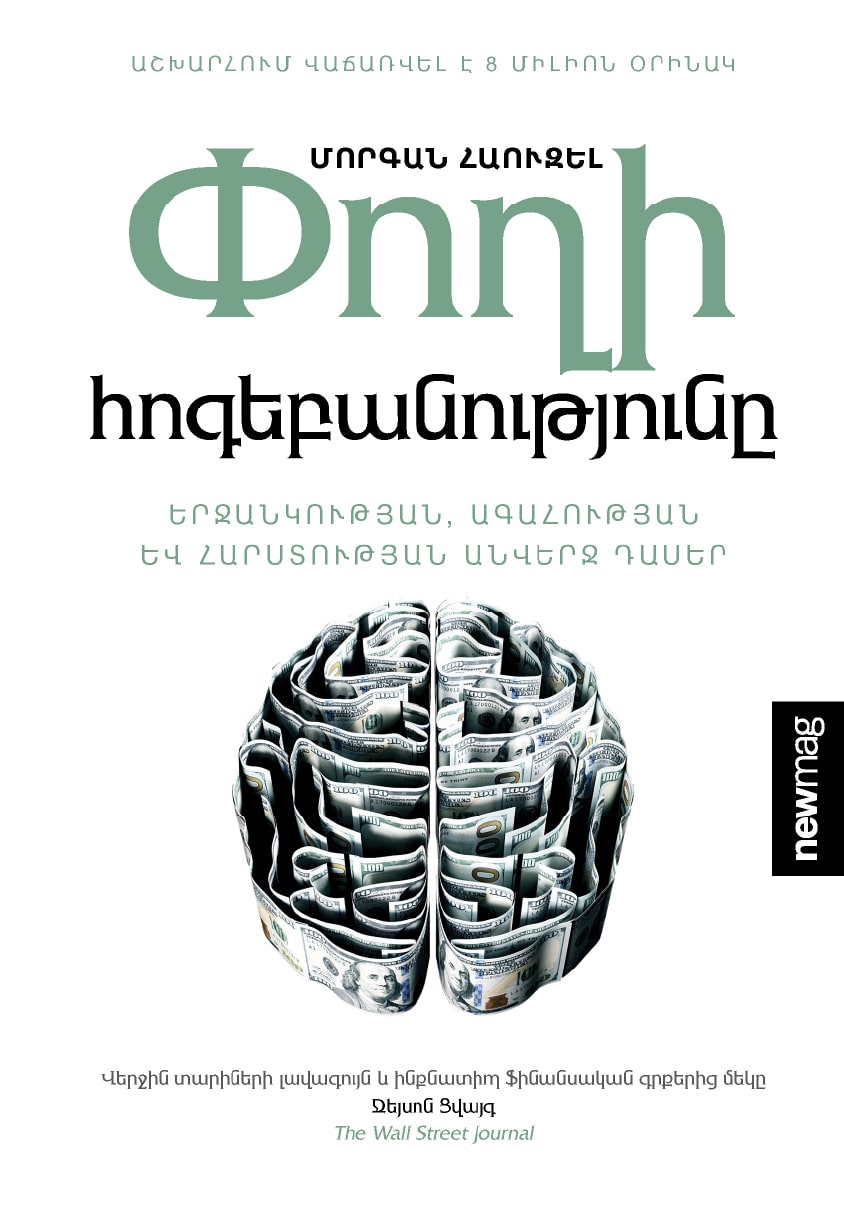
Morgan Housel
6800 ֏
Description
Doing well with money isn’t necessarily about what you know. It’s about how you behave. And behavior is hard to teach, even to really smart people.
Money―investing, personal finance, and business decisions―is typically taught as a math-based field, where data and formulas tell us exactly what to do. But in the real world people don’t make financial decisions on a spreadsheet. They make them at the dinner table, or in a meeting room, where personal history, your own unique view of the world, ego, pride, marketing, and odd incentives are scrambled together.
In The Psychology of Money, award-winning author Morgan Housel shares 19 short stories exploring the different ways people think about money and teaches you how to make better sense of one of life’s most important topics.
Read also