
Meeting with Newmag Signature Club members on the occasion of the 100th anniversary of the Armenian National Philharmonic Orchestra (photos)
04/14/2026
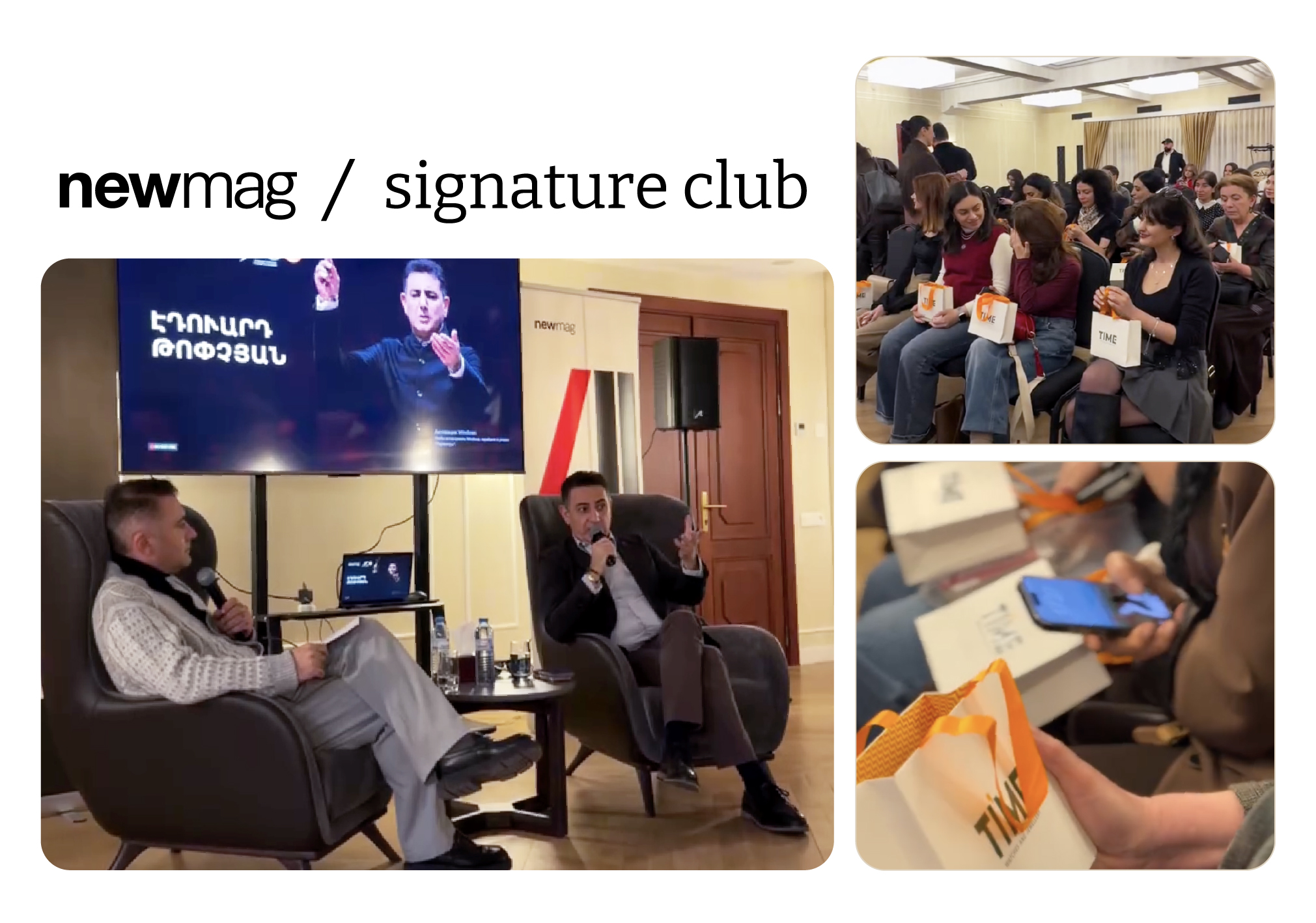
This year marks the 100th anniversary of the Armenian Philharmonic Orchestra. On this occasion, the orchestra’s principal conductor, Maestro Eduard Topchyan, met with members of the Newmag Signature Club and spoke about classical music, sharing insights from his lecture titled “How to Listen to and Understand Classical Music.”
Maestro Topchyan has been conducting the Philharmonic Orchestra since 2012, when he was just 29 years old.
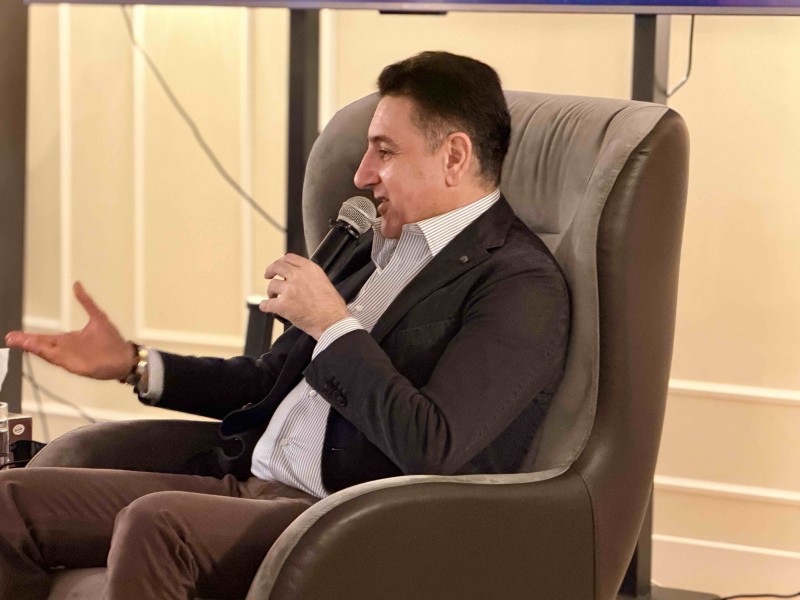
He spoke about the financial challenges of maintaining a symphony orchestra:
“It takes significant resources to sustain a symphony orchestra. Countries like Germany, France, and the UK allocate very large budgets - around $120,000 annually and beyond. Maintaining an orchestra is extremely expensive. If our budget were even slightly higher, we would be much closer to the top tier. I am confident that we will achieve more in the future.”
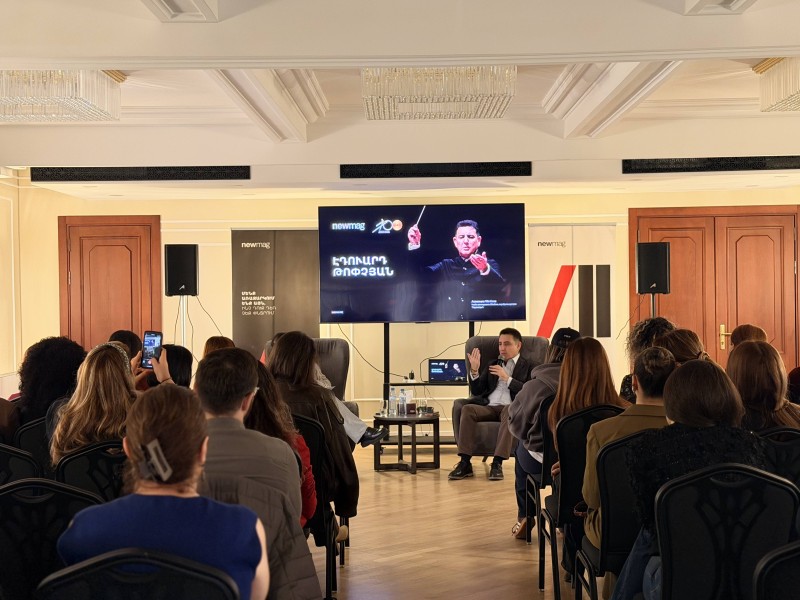
The maestro also reflected on musical taste and cultural perception in Armenia:
“Sometimes we are required to do things we would not otherwise do if we had sufficient financial means. For example, I may conduct a Céline Dion concert. She is a very good singer, and I also love the song from Titanic, but artistically it is not my field. I do it because tickets are sold.”
During his lecture for club members, Topchyan spoke about how classical music should be approached and understood. In his view, it requires preparation and sensitivity:
“In a way, educated and developed people form a kind of ‘elite club.’ The same applies to art and literature. Classical music is not something you simply turn on and listen to, you prepare for it, often from childhood, and then it becomes part of your life.”
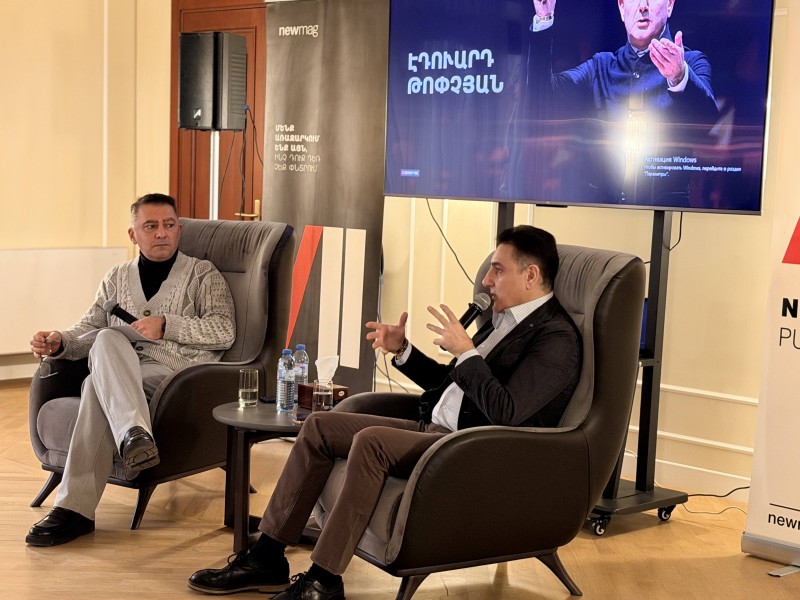
He noted that exposure to classical works often leads listeners to explore broader cultural worlds:
“When you listen to Faust, you want to read Goethe’s Faust. That is how new worlds open up, alongside impressionist music and painting. Classical music should first evoke a physical emotional response. If it does, the listener begins to engage intellectually as well.”
Comparing classical music with popular genres, he added:
“In a five-minute pop song, emotions are concentrated and immediate, you laugh, cry, and get excited quickly. Classical music is different. It unfolds gradually, develops, and reveals its structure over time. When you listen more, you begin to discover harmony, color, and depth, and eventually, you fall in love with it.”
Maestro Topchyan also offered a definition of classical music:
“It is primarily academic music created centuries ago. It does not age, does not fade, and does not wear out. We listen to Mozart’s symphonies today with the same interest as 150 years ago. Modern film music, such as Hans Zimmer’s compositions, is often mistaken for classical music, but in fact it is film score music that supports cinematic storytelling.”
The meeting became an engaging discussion about music, culture, and the ways in which audiences learn to listen, feel, and understand classical art.
Share


Read also